
Shane’s Story
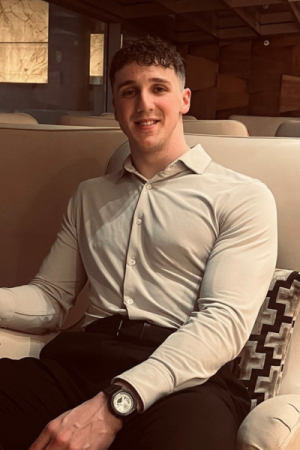
Shane, along with his partner Natalie, chose to stop drinking several years ago. Together, they later founded Soberight. Soberight provides training to help people and organizations moderate their alcohol use.
I’m based in Glasgow but grew up in West Cork, Ireland. I believe that, like most, I never made a conscious decision to start drinking alcohol - it was a given. I began drinking around 14 or 15. Peer pressure seems the obvious trigger, but in fact it was simply expectation. There is a strong acceptance of underage drinking in Ireland. In many ways it’s encouraged! The idea is that starting young somehow mitigates problematic alcohol use in future, which, of course, it does not!
Throughout my youth, drinking made an occasion out of what “Sober Shane” or just “Shane” would find boring. I continued to drink alcohol until I was 22 and decided to stop completely.
I never suffered from a dependence on alcohol and in many ways I would have been described as a “good drinker.” I certainly enjoyed alcohol at the time, particularly Irish Stout which almost became a hobby. I would somehow work my love of Murphy’s into every conversation and try to cap off any bout of work with a rewarding trip to the pub. It seemed that because my life was under control, I would gain nothing from drinking less. When I gave sobriety an honest chance, I realised just how much I had been starving myself of what else life had to offer me - outside of my glass.
Our story as a couple and as a company is that we don’t have one, or so I thought. I had a series of lucky escapes and wake-up calls in University etc. But doesn’t everyone? That’s what being young is all about?!
In a nutshell, alcohol was always the culprit in stealing from or spoiling any good streak I was on. In the areas of my life that I said I cared deeply about - relationships, fitness, reputation, professional life - alcohol made me spin my wheels.
Some might think “So what? You missed the gym? You had a drunken argument? What’s the big deal?” But we are what we do. There was a process of joined-up thinking that helped me to see the harm alcohol was inflicting on my life. There comes a time when one can’t just blame alcohol for all shortcomings.
For example, if I said “I seem to have an argument with my partner whenever I drink and I get terrible hangovers.” Well, I drink twice a week. I’m hurting someone and feeling sub-par most of the week. From there, I began to see that alcohol was impacting far more of my year as a whole than I believed.
When I got stressed about body image, work performance, relationships, I was fighting a losing battle because alcohol had robbed my potential to be at my best. I was prioritising short-term happiness over long-term pride. It may sound like I was craving a feeling of control or responsibility, but when I’m asked what the main benefit of sobriety is for me - it’s spontaneity.
The decision to be alcohol free has forced me to say yes to far more opportunities, friends, activities and travel. The version of myself that drank was close-minded and in truth, snobby. I would smirk and scoff, dismissing anybody’s attempts to cut back on alcohol. I was a product of the drinking culture I grew up in and that became starkly obvious for me in my personal life.
Across Ireland and the UK, it seems almost everyone drinks at almost everything. Unfortunately, it’s what we’re known for. For me, the decision to not drink which began in Ireland genuinely made me feel as though I was rejecting my home and culture.
The most well-executed crimes are the ones we have never heard of. Perhaps, the most effective marketing machine emerges from the industry that is never criticised - the alcohol sector.
We’re bombarded each day with critiques of Big Pharma, Big Tech, Politics and so on. Society calls for us to reject certain ideologies or notable figures and the internet is full of protest and discourse. But the only criticism I’ve heard in real life levelled against the alcohol sector is “Can you believe the price of a pint has risen again?!”
I have opted to become alcohol free. With a sober partner and our work stemming from that, I haven’t found the switch incredibly challenging in truth, albeit a complete lifestyle and identity shift!
However, most people begin each year looking to drink a little bit less. I have been to functions where otherwise confident, outgoing adults opt to pretend to drink or play down their efforts to cut back rather than confidently say “I’m not drinking this evening.” - That can’t continue.
Policy changes such as minimum unit pricing and advertising restrictions are proven and will aid in reducing alcohol harm into the future. However, what I believe drives the change needed for such policy recommendations to garner support and what I feel passionate about, is discourse around alcohol
For me, the paradox is that we don’t like to speak about our drinking habits openly in a culture of heavy drinking.
The power of social media, podcasting and television is undeniable. It influences our opinions, buying behaviour and our personality to an extent. Alcohol-free based business, events and personalities are fantastic at articulating messages around mindful drinking. However, I believe having those outside of the space share the views on alcohol is what can really move the needle.
For years, I would pan for gold in podcasts, desperately trying to find what might give me the edge. I would buy clothes worn by those I admired. I would idolise athletes and high-performers. I would envy very confident “put together” people and aspire to be like them.
I now realise that more often than not, those I respected were teetotal or had a clear grasp on why and how much they drank.
In a space that seeks to reduce alcohol related harms, we risk pigeonholing ourselves. It can seem taboo to speak about how much we drink and what it does to us. This can be made more apparent by focusing solely on recovery-based stories, health risks and worst case scenarios.
Encouraging more of those we know and admire, but don’t necessarily associate with, to have conversations around alcohol is, I believe, a low cost and effective way of reducing alcohol harm on a wider scale.
Much of what we become so impassioned about may never affect us personally. Yet, we all know somebody, likely very close to us, who has been devastated by alcohol. The blame always seems to lie at the feet of the drinker - “He needs to get his act together, he has a problem with alcohol, the drink doesn’t suit him!”
Alcohol is very widely available and the impact this had on my drinking is profound in hindsight. I felt out of place at various events if I wasn’t drinking. It led me to wonder whether alcohol enhanced an occasion or was a requisite. For example, at a wedding, I didn’t feel as refined or celebratory if I wasn’t twirling a tumbler of whiskey. At a match, I wouldn’t feel like I was enjoying myself as I should without a plastic pint glass.
The events and special occasions in our life that “make life worth living” seemed far less exciting to me if alcohol was suddenly removed - a holiday, a date, exam results, a family occasion. And so, yes, environmental factors played a major role in my drinking habits.
You’ll notice I have only mentioned health once. If there was one key thing I would tell everybody about alcohol, it’s that efforts to cut back or cut it out do not need to be motivated by health concerns.
Those hitting out at the “demonisation” of alcohol have begun to gain more traction than the low/no alcohol “movements.”
There are many health risks associated with consuming alcohol, most notably its place as a Group 1 Carcinogen. But with alcohol so ingrained in society, rattling off statistics, however true, can feel like fearmongering. It’s a shame when honest conversations around cigarettes or our food choices have been so successful. But the answer lies in how we respond to it.
Health optimisation is at the very bottom of my list of reasons for living an alcohol-free life. Truthfully, while I might pull out a statistic or two in conversation, I never think about it.
One doesn’t address their relationship with alcohol in an effort to live forever. I do it to squeeze as much as I can out of the life I have. Am I sober? Or just being myself, unaltered?
If you met me, you may think I fit perfectly into the bracket of the Gen Z health nut, obsessing over fitness and image. While there may be some truth in that…my decision to not drink alcohol doesn’t come into the equation. I panned for gold with different wellness hacks for years. But nothing pinned me to the couch like a regular hangover. Nothing led me to let myself or others down the way alcohol did. If I had a cold or warm shower or went on my morning walk or not, had a great sleep or a poor one - it made no difference to how I felt if alcohol had gotten there first. Wanting to feel better doesn’t mean needing to chase 100%.
Since stopping drinking I have enjoyed a healthy, fun-filled relationship, lived in 6 different countries, built a business with my partner that we absolutely love and become more confident and spontaneous than ever before.
When you meet somebody who doesn’t drink or drinks very little, it’s extremely rare to find that they regret that decision. I’m no different.
We gave alcohol hundreds of chances and I would encourage everybody to give themselves one chance by taking a relatively extended period away from alcohol, 6 weeks and beyond perhaps, to see just how much or how little they feel it adds to their life.
Sobriety gave me all that I sought from drinking alcohol.
